

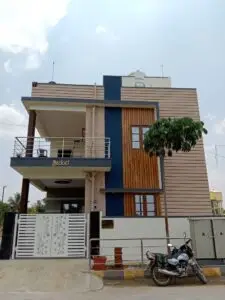
Building a house is an exciting and complex process! It can be broken down into three main phases, each with specific steps.
Here is a step-by-step guide to constructing a residential house:
🏗️ Phase 1: Pre-Construction & Planning
This phase focuses on design, legal approvals, and financial preparation before the first shovel hits the ground.
| Step | Detail | Key Professionals |
| 1. Initiation & Feasibility | Define the house size (e.g., 2BHK, 3BHK), style, and floor plan requirements. Set a preliminary budget. | Owner, Project Manager |
| 2. Land Survey & Soil Testing | A surveyor determines property boundaries and topographical features. Soil testing is crucial to determine the ground’s bearing capacity, which dictates the type of foundation needed. | Surveyor, Geotechnical Engineer |
| 3. Design & Drawings | An architect/engineer creates detailed architectural plans (floor plans, elevations), structural plans (columns, beams, foundation), and MEP plans (Mechanical, Electrical, Plumbing). | Architect, Structural Engineer |
| 4. Permits & Approvals | Submit the finalized drawings and required documents (e.g., land title, structural safety certificates) to the local municipal/development authority for building plan sanction and permits. | Architect, General Contractor |
| 5. Budget Finalization | The contractor provides a detailed cost estimate based on materials (quality, brand) and labor. This includes a contingency (10-15%) for unforeseen expenses. | General Contractor |
🚧 Phase 2: Structural Construction (The Build)
This is the physical construction process, often called the “rough” or “shell” stage.
| Stage | Construction Activity | Focus |
| 1. Site Preparation & Excavation | Clear the site of debris and vegetation. Excavate the trenches or area for the foundation as per the structural plans. | Foundation Preparation |
| 2. Foundation & Substructure | Lay and pour the footings (base), construct the foundation walls, and install the plinth beam (the beam connecting the columns at ground level). Waterproofing and anti-termite treatment are typically applied here. | Structural Stability |
| 3. Superstructure & Framing | Erect the vertical elements: columns (pillars) and horizontal elements: beams and slabs (floors/roof). This defines the final shape and structure of the house. | Main Structure |
| 4. Masonry Work (Walls) | Construct the interior and exterior walls using bricks, blocks, or other materials. Window and door openings are created, with lintel beams placed above them for support. | Enclosure |
| 5. Roofing & Shell Completion | Complete the final roof slab (if concrete) or roofing structure (trusses, sheeting). The house is now “locked up” and protected from the weather. | Weather Protection |
🎨 Phase 3: Finishing & Handover
This stage involves installing all systems and cosmetic elements that make the house livable.
| Stage | Construction Activity | Focus |
| 1. Rough-ins (MEP) | Plumbers and electricians install all pipes, drainage lines, electrical conduits, and AC ducting inside the walls and ceilings before plastering begins. | System Installation |
| 2. Plastering & External Finish | Apply plaster to the interior walls, ceilings, and exterior facade. Exterior work like cladding or texture application is done. | Surface Smoothing |
| 3. Flooring & Tiling | Lay floor tiles, marble, wood, etc., in all rooms, and install wall tiling in bathrooms and kitchens. | Aesthetics & Utility |
| 4. Interior Finishing | Install doors, windows, false ceilings, and built-in carpentry (kitchen cabinets, wardrobes). | Fittings & Fixtures |
| 5. Final Systems & Painting | Install electrical switches, light fixtures, sanitaryware (toilets, basins), faucets, and final plumbing fixtures. Apply paint to the walls and exterior. | Final Touches |
| 6. Final Inspection & Handover | Conduct a thorough final quality check (a “snag list”). Obtain the Completion Certificate and Occupancy Certificate from the local authority. The keys are handed over! | Legal & Move-in |